

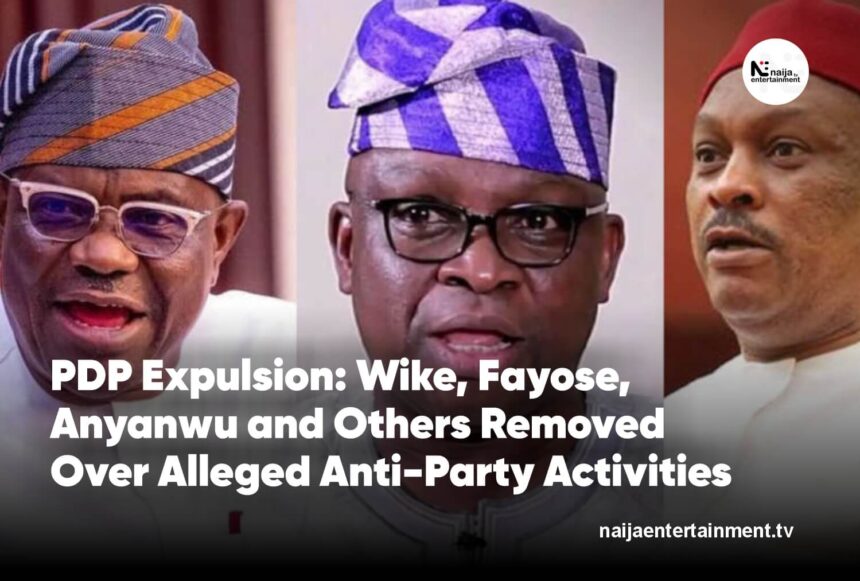
The PDP expulsion of several high-profile members has shaken Nigeria’s political space as the party announced the removal of FCT Minister Nyesom Wike, former Ekiti State Governor Ayo Fayose, and factional National Chairman Samuel Anyanwu for alleged anti-party activities.
The expulsions were officially ratified on Saturday during the ongoing PDP National Convention held in Ibadan, where delegates unanimously approved the motion.
PDP Expulsion: Convention Delegates Unanimously Approve Action
The motion leading to the PDP expulsion was tabled by Chief Bode George, one of the founding fathers of the party. It was seconded by Bauchi State Governor Bala Mohammed, reflecting strong internal support for disciplinary measures.
According to party officials, the expulsion was necessary to restore unity, discipline, and order within the PDP ahead of future elections.
Full List of Members Affected by the PDP Expulsion
Beyond the major political figures, several other party officials were also removed under the same allegations of anti-party behaviour. Those expelled include:
- Adeyemi Ajibade, SAN — National Legal Adviser
- Umar Bature
- AbdulRahman Mohammed
- Mao Chuambuwa
- George Turner
- Austin Nwachukwu
- Abraham Ammah
- Dan Orbih
Party delegates noted that the decision was aimed at repositioning the PDP and sending a strong message about accountability.
Why the PDP Expulsion Matters for the Opposition Party
Political analysts say the PDP expulsion of Wike and other heavyweights could have far-reaching consequences. Wike, now serving as FCT Minister under the APC-led government, has been a central figure in internal PDP disputes since the 2023 elections.
The removal of Anyanwu, Fayose, and other key figures signals the party’s attempt to purge internal opposition and strengthen its structure ahead of national reforms.
In summary, the PDP expulsion of Wike, Fayose, Anyanwu, and others represents a major shake-up within the party’s leadership. As the PDP undergoes internal restructuring, Nigerians will be watching closely to see how these decisions shape the future of the country’s political landscape.